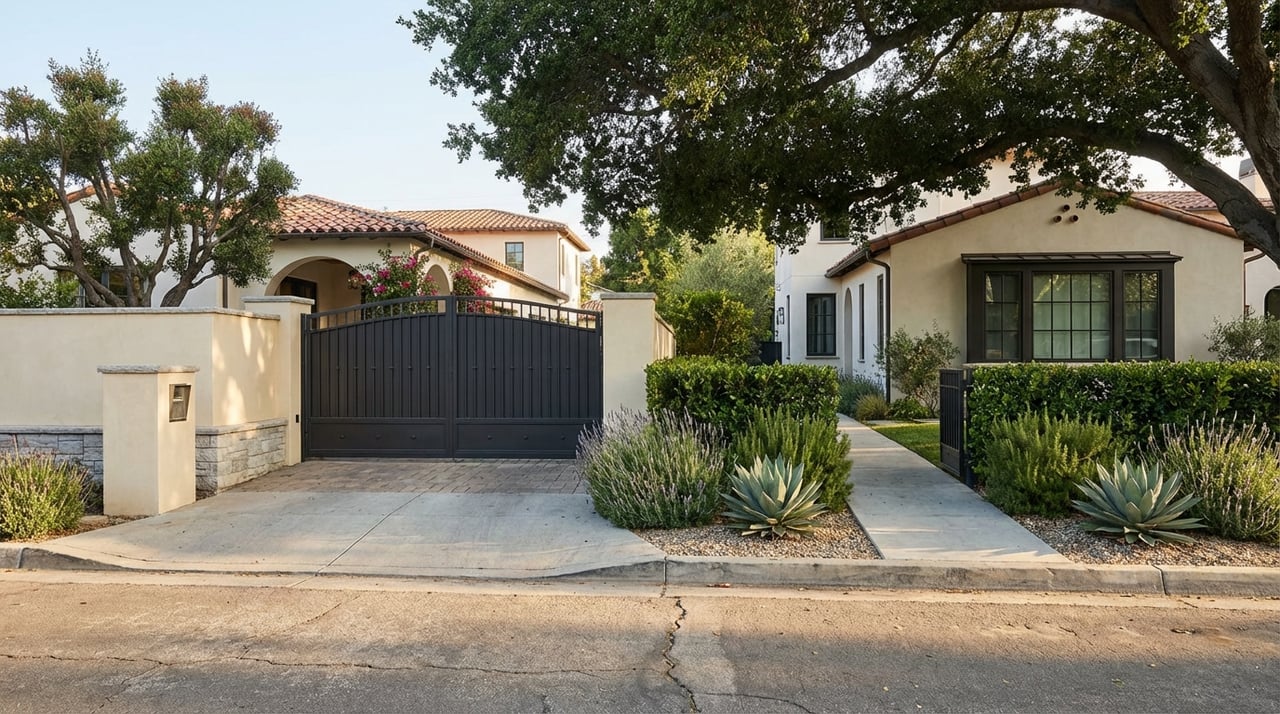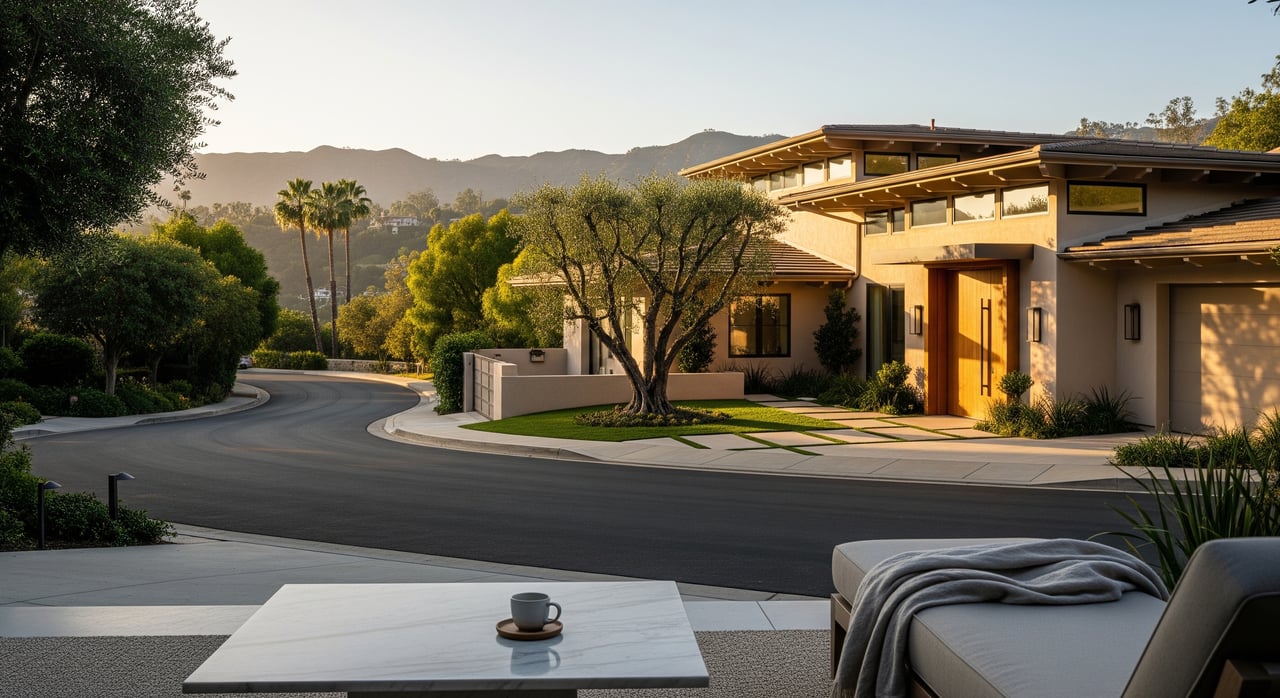
Thinking about buying or selling in the West Valley and not sure whether Calabasas or Woodland Hills is the better fit? You are not alone. These two neighboring markets look similar on a map but behave differently when it comes to price, inventory, and speed to sell. In this guide, you will learn how each area moves, what drives the differences, and how to use that insight to make a stronger real estate decision. Let’s dive in.
Quick snapshot: how they differ
- Price levels: Calabasas typically trades at a premium compared to Woodland Hills, both per home and per square foot.
- Inventory: Woodland Hills usually has more active listings and higher transaction volume, which creates more options at varied price points.
- Speed to sell: Sales velocity can vary by price band. Woodland Hills often shows quicker movement in mid-market ranges, while Calabasas can be faster or slower depending on unique property features.
- Housing mix: Calabasas has more larger-lot single-family homes and gated communities. Woodland Hills offers a broader mix, from condos and tract homes to hillside estates.
Price and affordability comparison
Median price and price per square foot
Calabasas tends to command higher medians and higher price per square foot because of larger lots, privacy, and a higher share of estate properties. Woodland Hills offers a wider range of prices with more mid-market options. When you compare price per square foot, remember it under-weights lot size, views, and premium finishes, which are common value drivers in Calabasas. Use per-square-foot as a starting point, then adjust for lot, view, and condition.
Where activity clusters by price band
In Woodland Hills, you will find more transactions in entry and move-up ranges, which can mean more competition for well-priced homes. Calabasas has a larger proportion of upper move-up and luxury sales, which can push medians around when a few high-end estates close. If you are comparing, align by property type and price band so you are looking at true apples to apples.
Inventory and sales velocity
Months of inventory and availability
Months of inventory helps show who has leverage. A lower reading points to tighter conditions and more competition. Woodland Hills often has more active listings and steady absorption, which can smooth month-to-month swings. Calabasas has fewer monthly sales, so a handful of listings coming on or off can shift the picture quickly. Always pair the metric with the transaction count to understand confidence.
Days on market and negotiation room
Median days on market and list-to-sale price ratios are useful for gauging demand and negotiation power. In Woodland Hills, well-presented homes in popular locations can move quickly, especially in mid-market ranges. In Calabasas, buyers may be less price sensitive in select gated or estate neighborhoods, yet unique properties can take longer to find the right match. Watch for price reductions and final list-to-sale ratio to understand true negotiation dynamics.
Housing stock and micro-markets
Calabasas profile
Calabasas is a smaller, more exclusive city with a higher share of larger-lot single-family homes and gated communities. Hillsides and protected open space limit buildable supply, which supports higher prices. With lower monthly transaction counts, medians can look more volatile, especially when several luxury closings land in the same period.
Woodland Hills profile
Woodland Hills, a neighborhood within Los Angeles, offers a broad mix of homes and price points. You will see everything from condos and remodeled tract homes to custom hillside properties. This variety creates more comps for sellers, more options for buyers, and smoother overall trends compared to smaller luxury markets.
What this means for appraisals and comps
Calabasas comps can be sparse and hyper-specific. Your pricing should reflect lot size, privacy, and the quality of finishes. In Woodland Hills, comps are more plentiful, so buyers and appraisers may lean more heavily on price per square foot and condition. Either way, adjust for lot and view premiums, and confirm HOA fees where applicable because those impact monthly affordability.
Practical strategies for buyers and sellers
If you are buying in Calabasas
- Get pre-approved with full documentation to move quickly on rare listings.
- Weigh lot, privacy, and HOA rules against your lifestyle and budget.
- Use a broader look-back period for comps to account for lower sales counts.
If you are buying in Woodland Hills
- Focus on condition and per-square-foot value in your target micro-area.
- Expect faster movement in well-priced mid-market homes and be offer-ready.
- Consider remodeled homes versus value-add opportunities based on your timeline.
If you are selling in Calabasas
- Price to your property’s unique strengths: lot, privacy, upgrades, and community amenities.
- Prepare for possible longer marketing times for one-of-a-kind estates.
- Use staging and targeted marketing to reach the right, privacy-focused buyer pool.
If you are selling in Woodland Hills
- Lean on recent nearby comps and price bands to set a tight list price.
- Invest in cosmetic updates and professional photos to stand out in a broader field.
- Monitor early showings and adjust quickly if traffic or feedback is soft.
Beyond price: lending and risk checks
Insurance and financing matter in both markets. Parts of the West Valley involve hillside or wildfire considerations that can affect insurance availability and cost, which flows into debt-to-income calculations. If your home has an HOA, verify fees and rules early, since those impact affordability and buyer pool. If you are self-employed or have nontraditional income, work with a team that understands loan packaging so your approval is strong when you find the right home.
How we measure this
- Core metrics we track: median sold and list price, price per square foot, active and new listings, pending and closed sales, months of inventory, median days on market, list-to-sale price ratio, and percentage of price reductions.
- Rollups: we prefer rolling 3- and 12-month views for clarity. If monthly sales are low, we switch to 6- or 12-month windows or quarterly summaries.
- Formulas:
- Months of Inventory = Active Listings / Closed Sales per month
- Absorption Rate = Closed Sales per month / Active Listings
- List-to-Sale Ratio = Sale Price / Final List Price
- Sample-size rule: when transaction counts are small, medians get jumpy. We always show counts and note confidence.
- Sources: local MLS for transactional data and boundaries, city planning maps for official polygons, assessor records for lot sizes, and regional reports for context.
Next steps
Whether you prefer the privacy of Calabasas or the variety of Woodland Hills, the right plan starts with clear numbers and a strong financing strategy. Our owner-led team pairs local brokerage expertise with in-house mortgage guidance so you can move from search to closing with fewer handoffs and more confidence. If you want a bilingual, education-first partner to help you buy or sell in the West Valley, let’s talk.
Ready to get specific about your home or search plan? Connect with Newline Grp for a personalized market read and lending strategy.
FAQs
Which area is more expensive: Calabasas or Woodland Hills?
- Calabasas typically trades at a premium on both total price and price per square foot, driven by larger lots, gated communities, and a greater share of estate properties.
Which market moves faster: Calabasas or Woodland Hills?
- Woodland Hills often shows faster movement in mid-market segments due to higher transaction volume, while Calabasas can be more volatile and varies by price band and property uniqueness.
How should sellers price in Calabasas vs Woodland Hills?
- In Calabasas, price to reflect lot, privacy, and premium finishes with broader comp sets; in Woodland Hills, use nearby recent comps and condition-driven per-square-foot comparisons.
How reliable is price per square foot in these areas?
- It is a helpful baseline but under-weights lot size, views, and finish quality; always adjust per-square-foot figures with qualitative factors common in both markets.
What non-price factors should buyers consider in the West Valley?
- Review insurance and wildfire exposure, HOA rules and dues, property condition and age, and commute routes that align with your day-to-day needs.
How does mortgage prep differ for Woodland Hills vs Calabasas buyers?
- Competitive mid-market segments in Woodland Hills reward fast, fully documented approvals, while Calabasas buyers benefit from tailored pre-approval that accounts for larger loan sizes and unique property features.