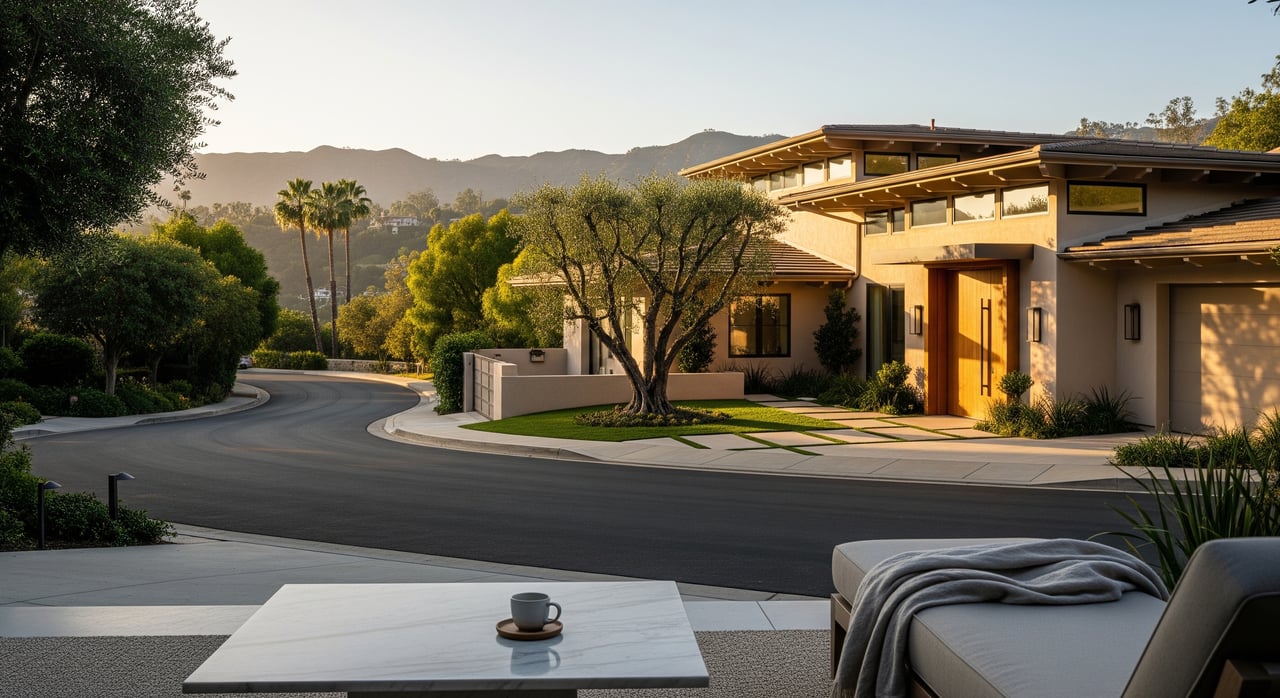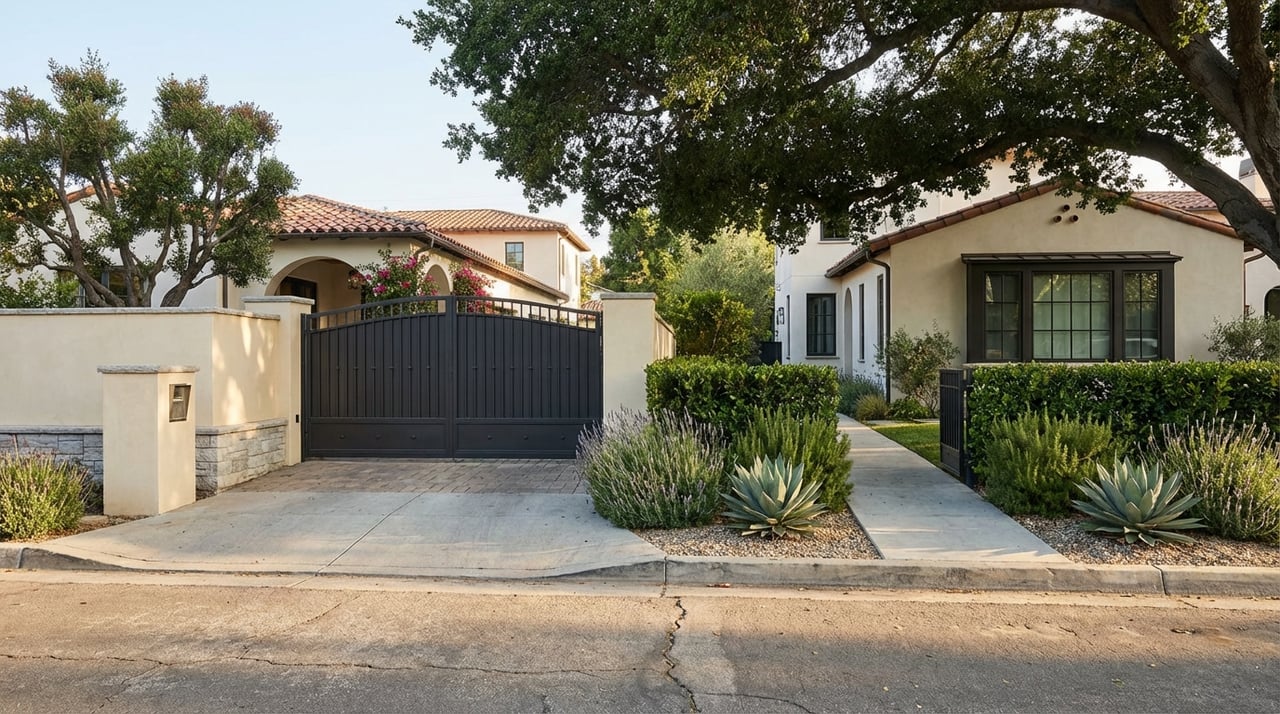
Thinking about whether a gated or non-gated neighborhood in Calabasas fits your lifestyle and budget? You are not alone. This choice shapes your daily routine, monthly costs, and long-term plans just as much as the house itself. In this guide, you will learn the real tradeoffs between privacy and access, how HOA fees work, what to check in the HOA documents, and which buyer profile each option tends to serve. Let’s dive in.
Calabasas snapshot and key tradeoff
Calabasas is known for a mix of estate-scale gated enclaves and established non-gated neighborhoods. Recent metro-level data places the city’s median sale price at about $1.37 million as of January 2026, while premier gated areas like The Oaks and its estate sections often sell well above that median. For most buyers, the decision comes down to four factors: privacy and amenities, community maintenance and HOA structure, carrying costs and rules, and access to shopping, schools, and The Commons. Understanding these will help you move confidently toward the right fit.
Gated living: what to expect
Lifestyle and amenities
Gated communities in Calabasas are designed for privacy and convenience. Many offer staffed or controlled entry, resort-style clubhouses, fitness centers, pools and spas, sports courts, and maintained parks or trails. Well-known examples include The Oaks and The Estates at The Oaks, Lake Calabasas and Park Calabasas, plus smaller gated pockets like Vista Pointe, Westridge, Calabasas Park Estates, and Mountain View Estates. Inside the gates, traffic is limited to residents and guests, which can feel more private but can also concentrate arrivals at a few entry points.
At the home level, you often see larger lots, outdoor living spaces, multi-car garages, and higher-end finishes. Estate sections may also include features like guest houses or dedicated media rooms. If you want amenities at your doorstep and a more controlled environment, this setting may be a strong match.
Costs and HOA dues
HOA dues vary widely by community and product type. It is common to see fees ranging from several hundred dollars per month for some single-family sections to higher amounts in amenity-rich condo or townhome buildings. Ultra-private or estate areas can carry additional dues or assessments. The range reflects what is covered, from landscaping and common-area insurance to on-site staffing and gate operations. For an overview of typical HOA cost coverage, review this summary of what HOA fees commonly cover.
If you want a sense of how fees can differ even within a single city and community type, browse public HOA directories, which show how dues and inclusions vary across tracts. For example, listings and directories for estate sections often note higher or layered dues. One example directory that illustrates variability is the page for The Estates at The Oaks on a third-party HOA resource. Treat any numbers you see as snapshots, not fixed benchmarks. Always verify directly with the HOA.
Maintenance, reserves, and roads
In many gated neighborhoods, private roads, gates, and shared facilities are maintained by the HOA. That shifts recurring costs into the HOA budget and helps explain higher dues. If you are evaluating a property, confirm whether the roads and gate equipment are HOA-maintained common areas, since that affects both long-term costs and who controls repairs. You can find helpful context on common-area maintenance responsibilities.
California law requires HOAs to prepare reserve studies and make regular disclosures on funding levels. A low reserve “percent funded” can signal a higher risk of future special assessments. When reviewing a community, ask for the latest reserve study and the budget to understand planned contributions. See the statutory framework in Civil Code 5550 and a plain-language overview of reserve funding concepts.
Non-gated living: what to expect
Lifestyle and access
Non-gated areas in Calabasas are more integrated with the city street grid and often place a premium on convenient access to The Commons, groceries, parks, and community services. You will find a mix of established single-family homes, hillside parcels, and canyon properties where privacy comes from lot design and topography rather than a gate. Some non-gated condo or townhome properties still include shared amenities, but access is typically more direct to daily destinations. For a helpful overview of how neighborhood types vary in Calabasas, you can skim this neighborhood context from a regional mover’s guide on Calabasas neighborhoods.
Costs and upkeep
Many non-gated single-family neighborhoods have low or no community dues. That can reduce your monthly carrying cost, though you will take on more of the exterior upkeep yourself, such as landscaping, pool service, or fencing. For attached housing outside the gates, HOA fees may still apply and can be comparable to gated complexes depending on the amenities and services included. If you are comparing dues to DIY maintenance, revisit this overview of typical HOA inclusions and cost drivers so you weigh like-for-like.
HOA governance: your due diligence checklist
California’s Davis–Stirling Act requires sellers to deliver a resale packet of HOA documents during escrow, and associations can charge reasonable fees to assemble those records. Use this time to study the rules, budget, and reserves before you release contingencies. Reference the state’s overview of escrow documents and transfer fees for what to expect.
Request and review at minimum:
- CC&Rs, Bylaws, and Rules and Regulations
- Current budget and the last 2 to 3 years of budgets
- Most recent reserve study and the “percent funded” disclosure
- Meeting minutes for the past 6 to 12 months
- Insurance declarations and management contracts
- Litigation disclosures, plus current dues, the last special assessment, and any transfer or gate fees
What to look for in the numbers:
- Reserve strength. A low percent funded increases the chance of special assessments. Study the latest reserve study and confirm if a site inspection was included. See the guide to reserve funding and disclosures.
- Budget trends. Frequent large increases, repeated special assessments, or references to deferred maintenance in minutes are warning signs. Here is a plain-language explainer on special assessments and what to ask.
- Rules that affect your plans. Rental restrictions, architectural review timelines, parking policies, and pet rules can impact daily life and investment strategy. For context on rental rules and enforceability, see this collection of Davis–Stirling case law analyses.
Practical steps during escrow:
- Ask the listing agent to order the resale package right after you go under contract so you can review it early. The Davis–Stirling guidance on escrow documents and transfer fees outlines the process.
- Confirm current dues, the most recent special assessment, and the status of reserve funding directly with the association or management company.
- Verify who owns and maintains roads and gate equipment. That determines which entity can levy assessments for big-ticket items. For background on common-area responsibilities, see this maintenance overview.
Note: Fees, CC&Rs, and policies change. Always verify the latest documents with the HOA or its management company before you finalize your offer.
How to decide: a quick checklist
Use this list to compare properties side by side:
- Monthly carrying cost. Mortgage + property tax + insurance + HOA dues + estimated private maintenance + utilities. Clarify which services your dues include using this HOA fee primer.
- Amenities vs cost. Clubhouse, gym, pools, and staffed gates often mean higher dues. Decide what you will use weekly.
- Privacy and circulation. Do you prefer cul-de-sacs and limited access or open streets and quicker trips to shops and services?
- Parking and guests. Some HOAs have strict on-street or overnight parking rules. Confirm guest policies.
- Projects and upgrades. Planning an ADU, exterior remodel, or solar? Study the architectural review process and approval timing in the CC&Rs.
- Resale and liquidity. Research suggests HOA homes can trade at a modest average premium, but outcomes vary by market cycle and HOA health. See the academic review of HOA price effects and weigh it against your time horizon.
Buyer scenarios in Calabasas
Resort-style privacy buyer
You want an amenity-rich environment with guard-gated entries and larger lots. Consider communities like The Oaks or estate sections known for clubhouses, fitness centers, and robust common areas. Expect a higher purchase price and higher dues. Verify reserve strength, gate operations, and any layered assessments before you write an offer.
Family and daily convenience buyer
You value short drives to The Commons, groceries, parks, and straightforward school routes. Consider non-gated neighborhoods near central corridors, or condo communities that deliver amenities without estate-scale lot maintenance. Compare HOA dues to the real cost of DIY yard and pool care so you pick the most efficient setup for your routine.
Value and resale-focused buyer
You want a lower entry price and flexibility. Non-gated pockets or older single-family homes can come with low or no dues, shifting more maintenance to you but improving monthly cash flow. Factor in upgrade budgets and study nearby comps for a realistic view of long-term value.
Financing and next steps
Whether you lean gated or non-gated, your financing should reflect the true monthly cost of ownership. That means modeling HOA dues, potential insurance changes, and a realistic maintenance budget along with your mortgage and taxes. If you are self-employed or have nontraditional income, pairing your home search with integrated lending guidance can keep your approval and timeline on track.
Hablamos español. If you are ready to compare options or want help reviewing HOA documents and reserves, reach out to Newline Grp to schedule a consultation. We combine local neighborhood expertise with in-house mortgage insight so you can decide with confidence.
FAQs
How do HOA fees in Calabasas typically change over time?
- HOAs adjust dues to match operating costs and reserve funding needs. Review at least the last 3 years of budgets and the latest reserve study to see planned contributions and trends. Learn how reserves work in this guide to reserve funding.
Are gated homes always safer or better investments in Calabasas?
- Buyers often choose gates for privacy and amenities, not guaranteed outcomes. Research shows HOA homes tend to trade at a modest average premium, but results depend on local market cycles and HOA financial health. See the academic overview of HOA price effects.
Which documents confirm the rules and current fees before I buy?
- The binding sources are the recorded CC&Rs, Bylaws, Rules and Regulations, current budgets, reserve studies, and any amendments. These are delivered in the resale packet during escrow. Here is the state’s summary of escrow documents and transfer fees.
Can an HOA limit my ability to rent my home in Calabasas?
- Many HOAs include rental restrictions. Enforceability can depend on timing and state law, so verify the exact language and effective dates in your CC&Rs and consult counsel if renting is central to your plan. For context, review this collection of Davis–Stirling case law analyses.
Who pays for private roads, gates, and major repairs in a gated community?
- If roads and gate systems are HOA common areas, the association usually maintains them with dues and reserve funds, and may levy special assessments when needed. Confirm ownership and maintenance responsibilities and see this overview of common-area maintenance.